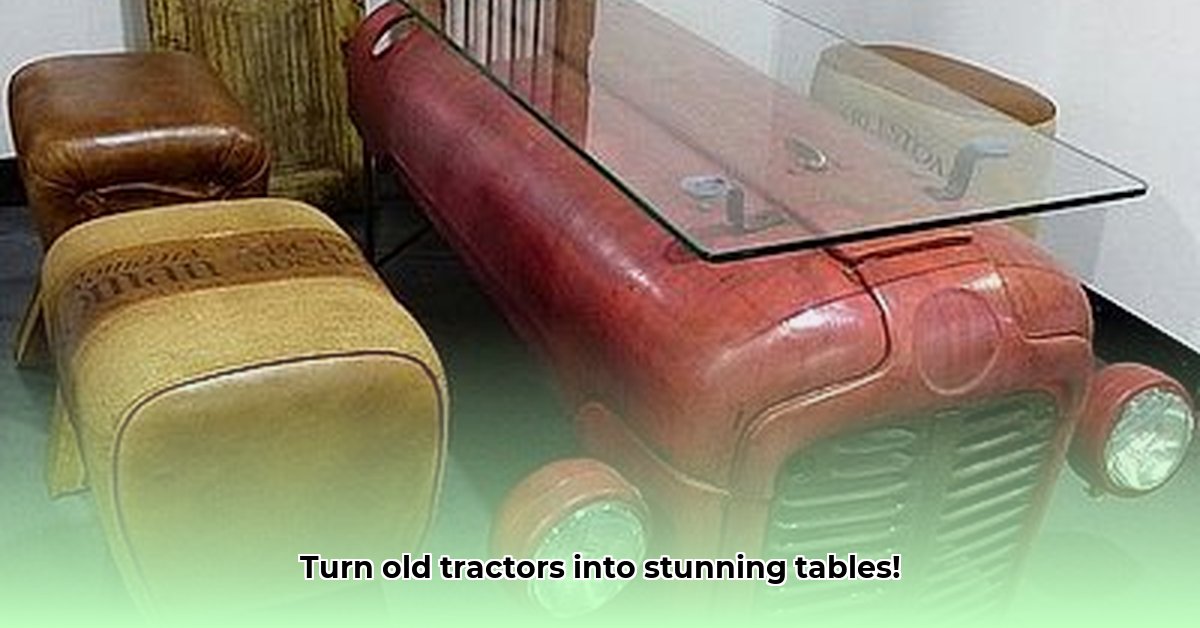
Tractor Hood Table: From Farm Field to Farmhouse Chic
Turning an old tractor hood into a unique table isn't just a trendy DIY project; it's a sustainable way to repurpose discarded metal and add a striking piece to your home. This guide details the process, from sourcing to finishing, and explores the broader environmental and economic benefits of upcycling farm equipment.
Why Choose a Tractor Hood Table?
A tractor hood table offers a blend of rugged industrial style and rustic charm. It's a statement piece that speaks to durability and agricultural heritage. But beyond aesthetics, it's a powerful symbol of sustainable living, diverting waste from landfills and reducing our environmental footprint. Isn't that a compelling reason to consider this project? This approach aligns perfectly with current trends toward eco-conscious design and repurposing of materials.
The Great Hood Hunt: Finding Your Perfect Piece
Finding the right tractor hood is the first step. Here's what to consider:
- Condition: Look for minimal rust or damage. Minor imperfections add character; major dents or holes could hinder the project.
- Size: Measure your space beforehand. A large hood might overwhelm a small room.
- Sources: Check local salvage yards, farm auctions, and online marketplaces. Networking with farmers can yield surprising results.
Prepping Your Hood: From Grimy to Glamorous
- Deep Clean: Power wash to remove dirt and grease. Use a wire brush for stubborn areas. A degreaser will remove oily residue.
- Rust Removal: A wire brush removes loose rust. For stubborn patches, use a rust converter to halt further corrosion. Always wear safety glasses and a mask when working with chemical agents.
- Sanding: Sand the surface smooth, starting with coarser grit and progressing to finer grits for a polished finish.
Building Your Tractor Hood Table: A Step-by-Step Guide
- Base Construction: A sturdy metal frame welded to the underside of the hood is a popular choice. A custom wooden base is another option. Consider the weight of the hood.
- Secure Attachment: Welding is ideal for metal bases. For wooden bases, use strong bolts and brackets rated for the weight.
- Finishing: Apply a protective coating (paint, stain, or sealant) to enhance the appearance and protect the table.
Beyond the Basics: Personalizing Your Creation
Consider these options to add your unique touch:
- Custom Legs: Use reclaimed wood, industrial pipes, or antique furniture legs.
- Lighting: Under-hood LED strip lighting can create a dramatic effect.
- Storage: Add shelves or drawers to the base for additional functionality.
The Eco-Friendly Angle: A Table with a Purpose
Repurposing farm equipment reduces landfill waste, promotes resourcefulness, and contributes to a circular economy. This single project showcases a commitment to sustainability and responsible material usage. According to a recent study by the EPA, upcycling materials reduces greenhouse gas emissions significantly compared to manufacturing new products.
Weighing the Pros and Cons: A Balanced View
| Pros | Cons |
|---|---|
| Unique, conversation-starting piece | Requires DIY skills, tools, and potentially welding |
| Durable and long-lasting | Can be heavy and difficult to move once assembled |
| Environmentally friendly | Finding the perfect hood may take time and effort |
| Highly customizable | Final look depends on the condition of the hood |
How to Repurpose Old Farm Equipment Sustainably
Dr. Emily Carter, Professor of Chemical and Biomolecular Engineering at Princeton University, emphasizes the importance of responsible upcycling: "Repurposing materials not only reduces waste but also conserves valuable resources. It’s a crucial component of a truly sustainable future."
Sourcing Your Materials: Finding the Perfect Tractor Hood
Explore various sources beyond junkyards, such as online marketplaces, antique shops, and local farmers. Inspect each find thoroughly for rust, damage, and hazardous materials.
Preparing the Hood: Cleaning and Safety First
Always wear protective gear (gloves, safety glasses, dust mask). Thoroughly clean the hood, addressing rust with appropriate methods.
Designing Your Table: From Rustic Charm to Modern Flair
Sketch out your design, considering size, shape, materials (legs, tabletop), and overall style.
Building Your Table: A Step-by-Step Guide
- Prepare the Hood: Clean, prime, and paint. Allow adequate drying time.
- Build the Base: Ensure stability and support for the hood's weight.
- Attach the Hood: Securely fasten the hood to the base.
- Add the Tabletop: Attach the tabletop securely.
- Finishing Touches: Apply a sealant and embellishments.
Considering Sustainability Beyond the Project
Use eco-friendly materials and ensure responsible disposal of unusable parts. This project exemplifies sustainable practices beyond the creation of a unique piece.
Pros & Cons of Repurposing Farm Equipment
| Pros | Cons |
|---|---|
| Unique and visually appealing furniture | Requires time, effort, and specific skills |
| Eco-friendly and sustainable | Sourcing suitable equipment can be challenging |
| Cost-effective compared to new furniture | Potential safety hazards (rust, sharp edges) |
| Promotes creativity and DIY skills | Requires appropriate tools and equipment |